Chloe Williams is Living Proof of Education Policy In Action

The Campaign’s Policy Fellow transformed her own educational journey into a mission to make college more accessible for California students.
For many young adults, college is the place where the world reveals itself. They meet people from different backgrounds, take classes that open their minds, and work at internships that lead to promising careers; they begin to interrogate their default settings.
But that trajectory did not reflect reality as far as Chloe Williams, the Campaign’s Policy Fellow, was concerned.
A conventional college journey was not the starting point for her sense of possibility. It was prison.
While incarcerated, she was offered a choice: work in the laundry shop for seven cents an hour or attend school.
“While I would never recommend that anyone experience prison, I can say it positively changed my life—how I see myself, how I think, and what I believe I am worth,” Chloe says.
She chose college. She also made a promise to herself that would shape her educational and career trajectory: “to be honest with myself and pursue opportunities that aligned with my interests and helped me grow as a person.”
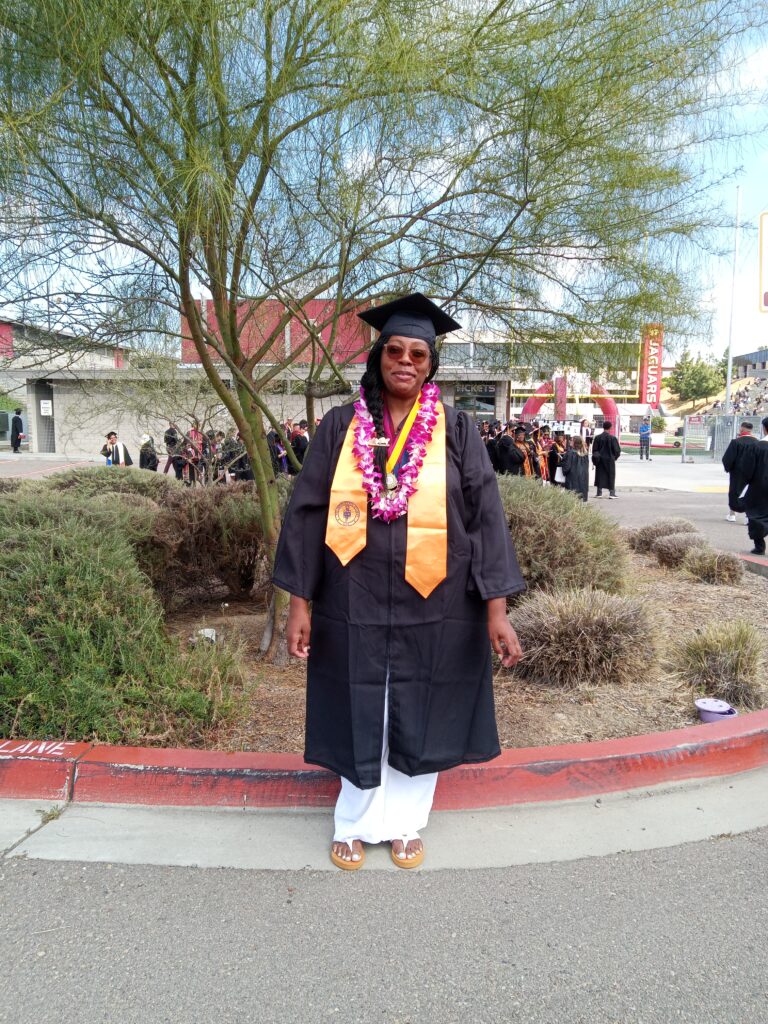
By 2022, Chloe had completed thirty units at Chaffey College and earned a 4.0 grade point average. When she was paroled later that year, she decided to continue her studies at Southwestern College in San Diego. While there, she also participated in the Campaign’s Student Leadership Institute.
At Southwestern, “I was seen simply as Chloe—not as a formerly incarcerated student, low-income student, homeless student, or LGBTQIA student.”
Her sense of who “simply Chloe” could be continued to grow through a series of campus jobs and an internship with Stanford University Libraries, which gave her insight into higher education systems and systemic barriers. Academically, she exceled, but like almost half of American undergraduates, her housing situation was precarious. She lived in a hotel until a scholarship enabled her to find stable housing.
“Once I moved into a safe and stable environment, I was able to elevate my education and graduated from Southwestern in just one academic year.”
It may seem obvious that students who aren’t in survival mode are able to better focus on their studies, but while institutions are offering creative solutions—from campus food pantries to pay-what-you-can food trucks to subsidized housing—the need for systemic solutions is urgent.
At the Campaign’s April Lieutenant Governor’s Forum, participating candidates Oliver Ma and Michael Tubbs stressed the importance of affordable housing.
“There’s no use [in California] being the fourth largest economy” in the world when so many are unable to find housing, said Michael Tubbs.
Chloe took another leap and transferred to UC Berkeley, scraping together scholarships and other resources to pay for housing and food in a city where studio apartments rent for an average of $2,000.
As a Policy Fellow, Chloe now works to provide policymakers with the information they need to make higher education accessible, affordable, and achievable for students like herself. The Campaign’s current strategic plan prioritizes economic justice and Pathways With Purpose—clear roadmaps that ensure students can enroll in transfer-level coursework, transfer to a four-year institution, and earn a degree in minimal time.
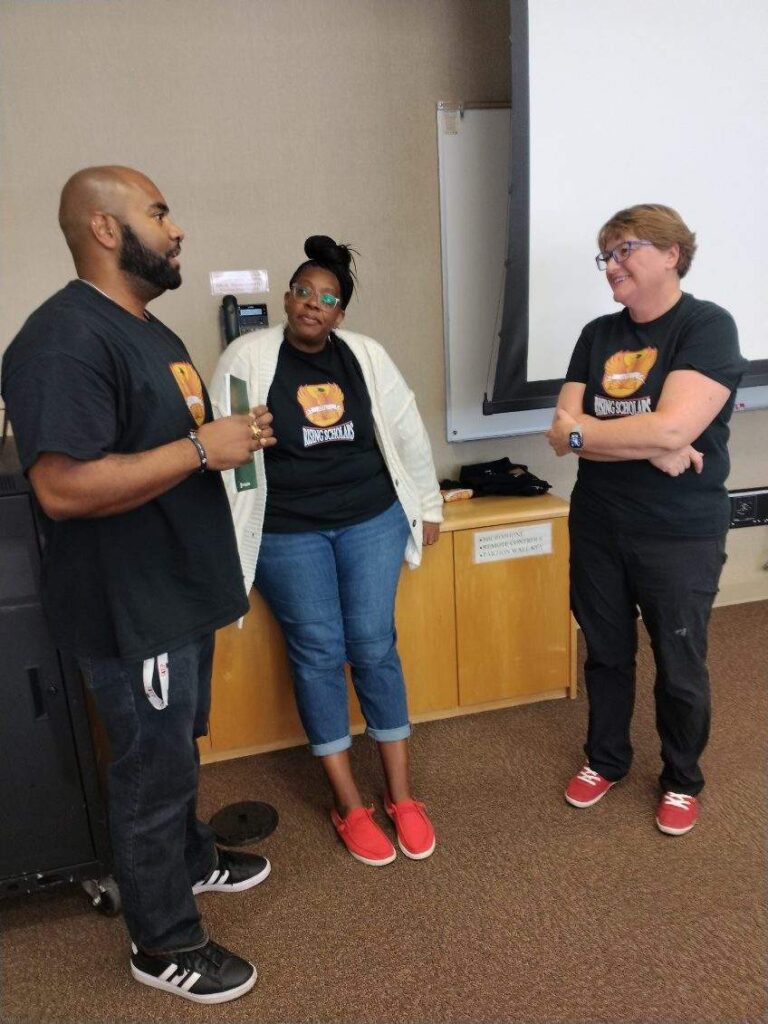
Although material and mental obstacles have been sources of stress, Chloe found that opportunities came with their own challenges, as when she turned down an internship with Princeton University and received criticism from a mentor and peers, who didn’t want her to miss out on a prestigious prospect. But she remembered her promise to herself and chose a path that felt true to who she was. Instead, she interned with Alameda Pretrial Services. Serving those in need was more important to Chloe than whatever status the Princeton internship might bestow.
Today, she is pursuing a master’s degree in library and information science at San José State University—an echo of the library clerk job she held in prison—and knows that a doctorate is in her future.
Her breadth of experience dovetails with her current fellowship at the Campaign in unexpected ways. She enjoys working with data and has found several projects related to Black student success fulfilling.
“I have recently taken on projects requiring me to organize, describe, and analyze data…. Above all, analyzing and interpreting policy information directly aligns with my graduate program, and I have already begun putting these skills into practice,” Chloe explains.
Each Policy Fellow completes a capstone project on a topic of their choosing, and Chloe’s will focus on students experiencing homelessness and housing insecurity, examining how systems can better support students whose basic needs are not being met. She knows firsthand how students can struggle in systems not designed for them, and at the Campaign, she plays an active role in helping students like herself.
When she’s not working to transform systemic injustice, she reads about it—in a fun way.
“I am a big fan of Carl Hiaasen, and I just finished reading Fever Beach for the fifth time. It is satire at its finest, exposing the hypocrisy and absurdity of racism in ways that leave me shaking my head and laughing out loud.”
Students like Chloe don’t just overcome barriers. They go on to transform the systems that once stood in their way.
Your gift to the Steve Weiner & David Wolf Founder Fellowship Program helps develop the next generation of higher education advocates by providing paid fellowships, mentorship, and hands-on policy experience for emerging leaders committed to expanding college opportunity for all Californians.
Help invest in tomorrow’s changemakers by making a donation today.