STEM Pathways Gathering Provides Strategies for Equity
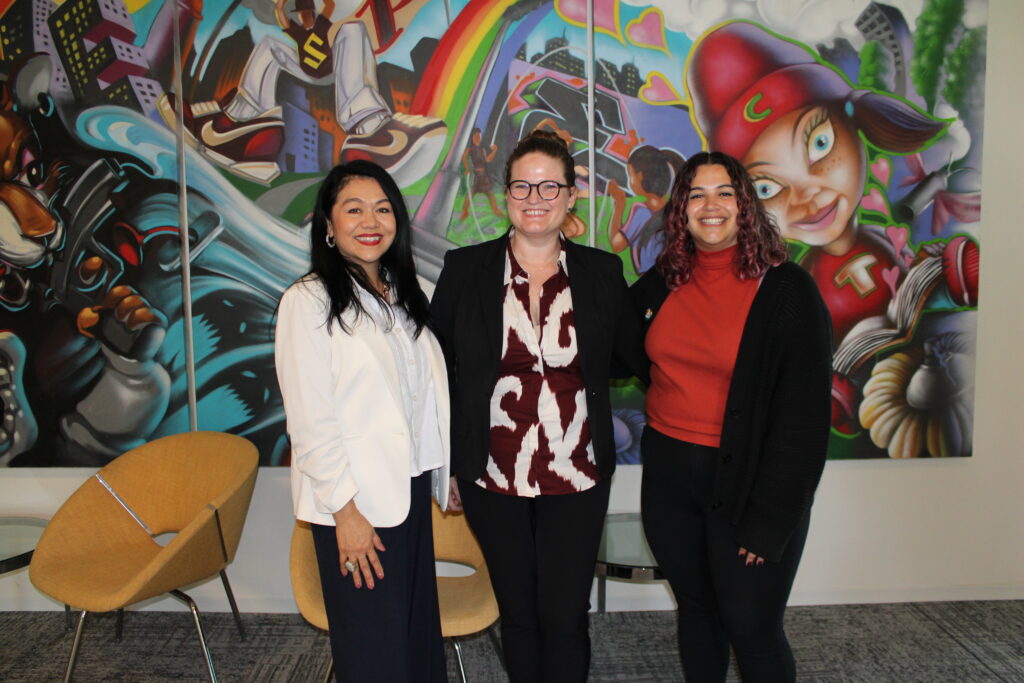
When Dr. Anne Cawley tells people she teaches math, the reactions are often revealing.
Some express admiration. Others recoil. And occasionally, the response exposes something deeper. Once, she even went on a first date with a man who told her that if he’d had a math teacher who looked like her, he might have gotten a better grade.
There was no second date.
Why did Dr. Cawley, Professor of Mathematics and Statistics at Cal Poly Pomona, mention this to a room full of educators and advocates? The group was gathered on June 4 at the California Endowment in Los Angeles for Equity in Action: Strengthening STEM Pathways, hosted by the Campaign with support from the Broad Foundation. Dr. Cawley’s questions and anecdotes drove home the point that making STEM degrees and careers accessible to all requires both technical precision and cultural change.
Attendees, including representatives from Just Equations, DIY Girls, and other STEM advocacy organizations, shared their own stories of bias and barriers. Marisa Johnson, the Campaign’s Director of Policy Impact, provided historical context for the current challenges facing minoritized students who hope to enter STEM professions. Prior to the 2017 passage of legislation that required community colleges to place students in transfer-level math and English courses, thousands of students were placed in remedial math annually; 93% percent of them never made it out.
But there have been improvements: Thanks to equitable placement reforms led by the Campaign and others, remedial placement has been virtually eliminated at the community colleges, and students who would have never even seen a college math textbook are now passing the courses that will help them transfer, first year transfer level math completion for students who had less than a 1.9 GPA in high school increased by 10%.
This boost makes students more likely to transfer to four-year universities and has been especially beneficial to Black and Latinx students, who have historically encountered barriers to STEM careers. In 2024, the Campaign supported policy that adjusted its landmark Associate Degree for Transfer to better support STEM pathways.
The accessibility of STEM pathways is particularly relevant in light of a May letter to the UC Board of Regents, signed by more than 1,000 faculty, to reinstate standardized tests as a requirement for entry, with math preparation at the center of this discussion.
Conversations at this event illuminated the nuances to STEM pathway access and math preparation, and recentered the focus around how to provide students with the pathways and supports that set them up to succeed. These conversations further affirmed what we’ve long known to be true: that the SAT and ACT are biased against racially minoritized, low-income, and disabled students.
The Campaign published a brief titled Rethinking the Use of Tests in College Admissions, which noted that test-free policies “facilitate access for traditionally excluded students and eliminate a substantial source of bias from the evaluation of applicants”—a stance that the Campaign firmly maintains as the UC’s Board of Admissions and Relations with Schools will formally consider whether to reinstate the SAT and ACT as an admissions requirement.
Why is it important to provide support, encouragement, and smooth degree and career pathways for STEM students? Almost 40% of Californians are Latinx, but only 7% of the state’s physicians are; 6% are Black, but only 3% of physicians are. California faces a nursing shortage despite the fact that large numbers of qualified students are applying to nursing programs.
The conversations at Equity in Action reinforced a simple but urgent reality: Talent is everywhere, but opportunity is not. Creating stronger STEM pathways requires coordinated action across TK-12 education, community colleges, universities, employers, policymakers, and philanthropy.
The Campaign for College Opportunity remains committed to advancing policies and partnerships that expand access, strengthen transfer pathways, and ensure more students, regardless of zip code, can thrive in STEM fields that are critical to California’s future.
As Marisa noted in her presentation, we must “challenge the deficit mindset and invest in boosting students’ confidence and leaning into their strengths.”
After being invited to share their associations with math via Mentimeter, multiple attendees declared it “hard” and two just entered a laughing emoji. Other entries offer a window into attitudes that may prevail if STEM pathways improve: “empowerment,” “tool,” “healing”…even “fun.”
Perhaps that is the real work before us. Not simply building STEM pathways, but transforming how students see themselves within them. When students are encouraged to recognize their strengths, challenged to see possibility where others have seen barriers, and supported by systems designed for their success, STEM becomes more than a subject. It becomes a pathway to opportunity, innovation, and purpose.
Visit our website to learn more about how the Campaign is strengthening educational and workforce pathways; please consider donating in support of our work.